

1. Introduction: the Importance of Fixed-Term Deposit Comparison for 2025
After a long period of low interest rates, fixed-term deposit (Festgeld in Germany) interest rates have started to rise again. Therefore, making a fixed-term deposit comparison in 2025 can be particularly profitable. Taking advantage of high interest rates and secure return opportunities is a priority for investors looking to protect their savings. Fixed-term deposits are predominantly preferred by conservative investors as they combine security and predictability.
In summary: When you open a fixed-term deposit account, you invest your money at a fixed interest rate for a specific period. The interest rate remains unchanged throughout the term, allowing you to calculate your return clearly. In this article, you will learn what to consider when investing in fixed-term deposits in 2025 and how to find the most attractive offers.
2. Current Interest Rate Situation and 2025 Outlook
The long-standing low interest rates of the past have started to gain upward momentum thanks to inflation and the monetary policy moves of central banks. Experts predict that by 2025, interest rates will follow a stable course or may gradually increase.
2.1 why are Fixed-Term Deposit Interest Rates Rising?
- Inflation: As inflation increases, banks and savers may demand or offer higher interest rates.
- Monetary Policy: Interest rate hikes by institutions such as the European Central Bank (ECB) positively affect banks’ deposit rates.
- Inter-Bank Competition: Banks looking to attract new customers may try to entice investors with higher interest rates.
3. What is a Fixed-Term Deposit? Summary Information
Fixed-term deposit (Festgeld) in Germany refers to investing money at a fixed interest rate for a specific period (such as 6 months, 1 year, 2 years, or 5 years). During this period, the interest rate remains fixed, and you are not affected by market fluctuations. However, you generally cannot withdraw your invested money until the end of the term.
Key features:
- Fixed Interest: An interest rate that remains unchanged throughout the term.
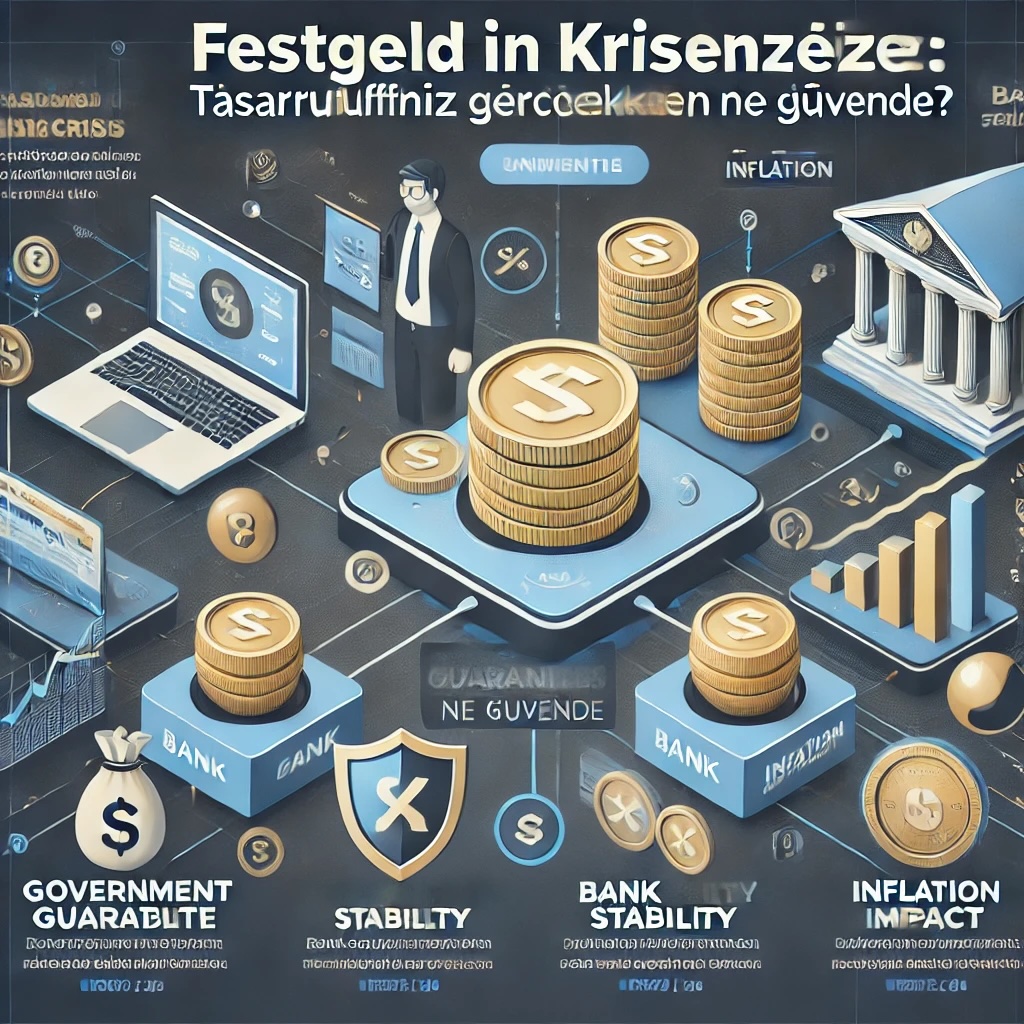
- Secure Investment: Legal deposit guarantee up to 100,000 Euros in Germany and most EU countries.
- Low Flexibility: Withdrawing money during the term is generally not possible or incurs additional costs.
4. What to Consider in Fixed-Term Deposit Comparison for 2025
When selecting the best fixed-term deposit offers in the market, it is recommended to examine the following criteria:
4.1 Interest Rate and Term
- Interest Rate: Compare the nominal interest rates of banks. Even a small rate difference can create a significant yield difference, especially for large amounts.
- Term: Different terms are available from 3 months to 5 years. Consider carefully how long you can set aside your money.
4.2 Deposit Guarantee
Always check if the bank is covered by legal deposit insurance. In Germany “and other EU countries, there is usually a state guarantee of up to 100,000 Euros per bank and customer”.
4.3 Minimum and Maximum Investment Amount
Some banks may require a minimum investment amount of 2,500 or 10,000 Euros, while others allow opening an account with 500 Euros. Make sure to choose banks that offer limits suitable for your budget.
4.4 Interest Payment Time
When the interest payment is made is also an important detail:
- Annual Payment: If interest accrues every year, you can benefit from the compound interest effect by reinvesting your interest income.
- Single Payment at Term End: Preferred especially for short terms and easier to calculate.
4.5 Special Campaigns and Promotions
- New Customer Bonus: Some banks may provide additional bonuses to acquire new customers.
- Different Term Options: Sometimes more attractive interest rates are offered with non-standard terms like 9 or 15 months.
- Initial Balance: Some banks may give a small additional reward or cash gift when first opening the account.
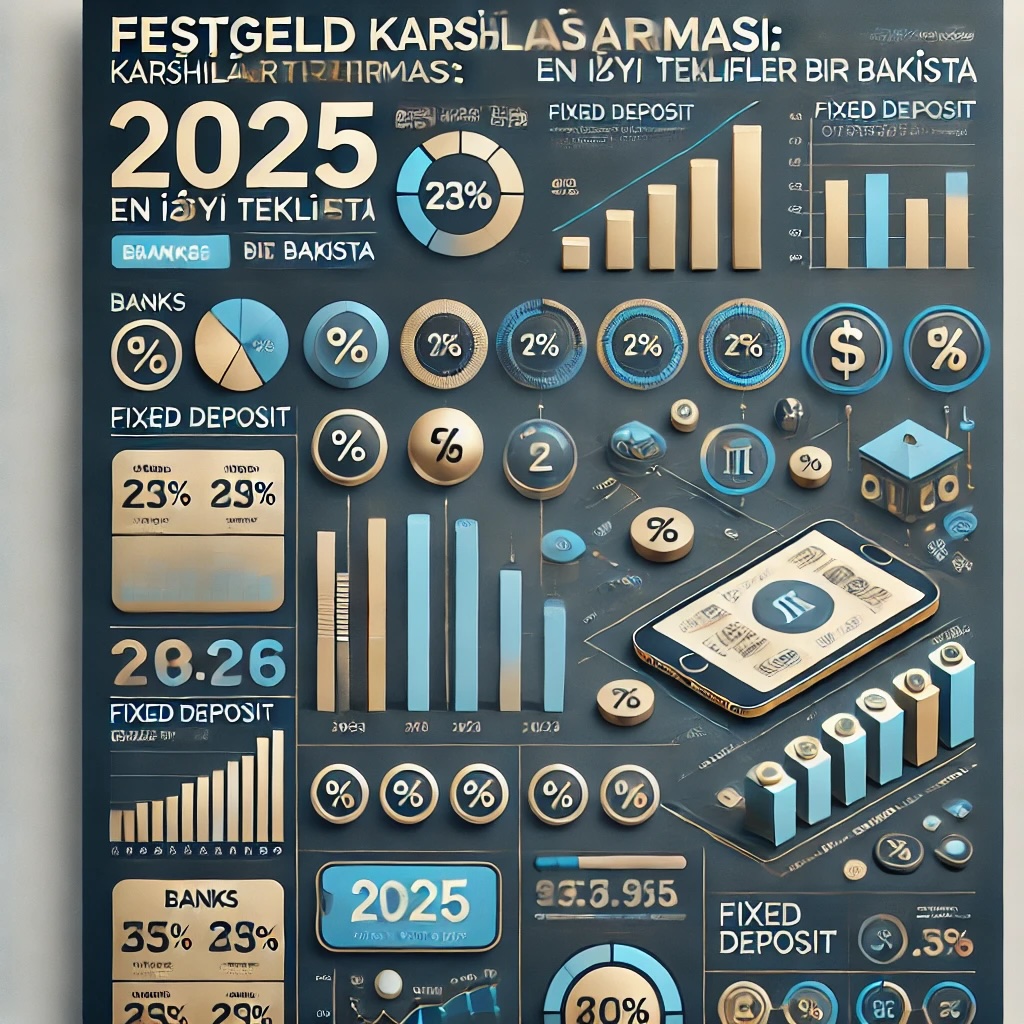
5. 2025 Fixed-Term Deposit Comparison: Sample Table
Note: The following interest rates and conditions are provided for example purposes. Always check online comparison sites or official bank pages for current rates.
| Bank | Interest Rate (annual) | Term | Min. Investment Amount | Deposit Guarantee | Special Advantage |
|---|---|---|---|---|---|
| Bank A | %2,10 | 12 Months | €1,000 | €100,000 | €50 bonus for new customers |
| Bank B | %2,30 | 24 Months | €5,000 | €100,000 | Annual interest payment |
| Bank C | %2,50 | 36 Months | €500 | €100,000 | Free current account (Girokonto) |
| Bank D | %2,70 | 48 Months | €10,000 | €100,000 | Additional interest advantage at the end of the term |
Recommendation: Be sure to look at details such as additional fees and charges, not just nominal interest rates. This way, you can calculate your net profit more accurately.
6. Steps to Open a Festgeld Account
- Research and Comparison: Use online comparison sites or bank websites to learn about current interest rates.
- Application: Fill out the application form on the website of your chosen bank.
- Identity Verification: Complete the identity verification process using methods like Postident or Videoident.
- Money Transfer: Transfer the determined amount to your newly opened Festgeld account.
- Interest Conditions Confirmation: The bank sends or digitally shares a confirmation document containing the term, interest rate, and other conditions.
7. Advantages and Disadvantages of Festgeld
7.1 Advantages
- High Security: Legal deposit guarantee up to €100,000.
- Fixed Interest: Opportunity to benefit from the same interest rate throughout the entire term.
- Easy Management: Does not require active monitoring like stocks or funds.
7.2 Disadvantages
- Low Flexibility: Withdrawing money during the term is difficult or incurs additional costs.
- Inflation Risk: Real returns may be negative during high inflation.
- Missing Out on Interest Rate Increases: If interest rates rise during the term, you cannot benefit from higher rates than your fixed rate.
8. Festgeld or Daily Account (Tagesgeld)? Which is more Profitable in 2025?
“In addition to Festgeld”, Tagesgeld (daily account) is also a popular savings method in Germany. With Tagesgeld, you can access your money at any time, but the interest rate may fluctuate, and banks can change these rates frequently.
- Festgeld: Higher and fixed interest, lower liquidity.
- Tagesgeld: More liquidity, generally lower or variable interest rate.
If you are making long-term plans and don’t need the money immediately, Festgeld can be advantageous. However, keeping some of your money in a daily account for emergencies is also seen as a sensible strategy.
9. Frequently Asked Questions (FAQ)
1. What happens to my money if the bank goes bankrupt?
In Germany and many EU countries, there is a legal deposit insurance of up to €100,000 per person per bank. Any amount above this may be at risk in the worst-case scenario.
2. Can I close my Festgeld account before its maturity?
It is generally not possible or leads to significant deductions (penalties/fees). Therefore, it is recommended to read the contract terms carefully.
3. How safe are foreign banks?
Many foreign banks also have government guarantees. However, the functioning of this guarantee may vary by country. Be sure to check the credit rating of the country where the bank is located and its deposit insurance system.
4. How do interest rates change for longer terms?
Generally, the interest rate increases as the term lengthens. However, you should make a good prediction of future interest trends. If interest rates are likely to rise further in the future, a long term may be disadvantageous for you.
5. Is Festgeld or government bonds more sensible?
Government bonds also offer a certain security, but their prices can fluctuate according to market conditions and may require active monitoring. Festgeld, on the other hand, provides a return at a fixed rate and is much simpler to manage.
10. Conclusion: how to Find the Best Festgeld Offer in 2025?
Fixed-term deposit comparison for 2025 is a sensible choice for anyone seeking secure and predictable returns. Rising interest rates increase the opportunity to benefit from long-term fixed interest rates. However, you should definitely evaluate factors such as term, interest rate, deposit insurance, and potential fees. You can further increase your returns through new customer bonuses or various promotions.
- Compare: Be sure to examine different banks for the most up-to-date rates and conditions.
- Plan: Clarify your investment period and how much money you can deposit.
- Open an Account: Open a fixed-term deposit account at the bank offering the most attractive offer and start earning with fixed interest.
When you choose the right bank, your chance of obtaining a secure, stable, and satisfactory return for 2025 increases. We wish you high profits from now on!