

1. Introduction: the Importance of Properly Closing a Fixed-Term Deposit Account
In Germany, a Festgeld account (fixed-term deposit) stands out as a reliable and predictable investment tool. However, even with a fixed interest rate and predetermined maturity period, you may want to close your account or make the right moves when it matures. Acting consciously at this stage helps you both maximize your returns and avoid unnecessary expenses.
In this guide, you’ll find all the important information on how, when, and under what conditions you can close your Festgeld account.
2. What is Festgeld and why is it Important?
- Definition: Festgeld is a type of deposit you make to the bank with a fixed interest rate for a specific period.
- Advantage: It’s not affected by interest rate fluctuations; you know the amount of your return from the beginning.
- Disadvantage: It’s generally not possible to use your money during the term, or it leads to significant interest loss.
Why is it important?
Festgeld is ideal especially for those seeking low risk and fixed returns. However, if the maturity date is approaching or you have an unexpected need for cash, you may want to close your account. This is where knowing the details of maturity and interest rates becomes critical.
3. Maturity Period: when to Close a Festgeld Account?
3.1 Maturity
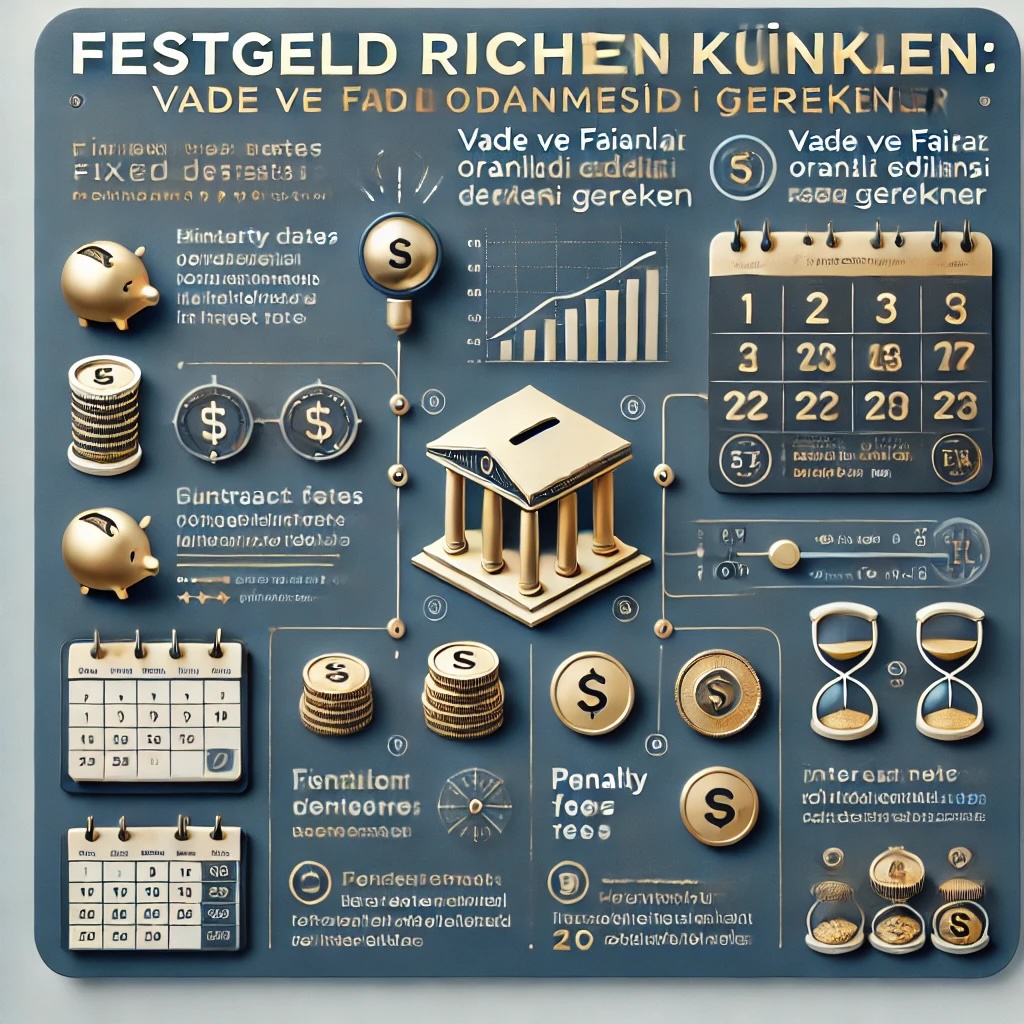
The ideal scenario is to close the Festgeld account at the end of the term. When the term ends, you can get your money back as principal + interest without any additional fees or interest loss.
- Example: If you have a 12-month Festgeld account, at the end of the 12th month, the bank usually automatically transfers the principal and the interest you’ve earned to your current account or “prolongs” it for a new term.
- Attention: In some banks, the “automatic renewal” (Prolongation) feature may be active by default. If you don’t want the account to be automatically renewed, you need to notify the bank in writing or through online confirmation before the end of the term.
3.2 Early Termination Situations
Early termination is not always possible. Most banks allow early closure only in very exceptional circumstances (such as death, bankruptcy). Even if allowed:
- High Penalty or Interest Loss: When you make an early withdrawal, banks usually reduce or don’t pay the interest accrued until that point.
- Costs: Some contracts may include additional fees or penalty charges.
Important: If you’re considering early termination, be sure to read your bank’s general contract terms or AGB (Allgemeine Geschäftsbedingungen) text.
4. Interest Rates: in which Situations Can They be Advantageous or Disadvantageous?
4.1 Maintaining the Fixed Interest Rate
One of the biggest advantages of a Festgeld account is that it offers a fixed interest rate. This means your return is not affected even if market interest rates fall.
- Example: If the contract has a 2% fixed interest rate, even if the market interest rate falls to 1% during the term, your interest rate doesn’t change.
4.2 Missed Opportunities in a Rising Interest Environment
Conversely, when market interest rates rise, you may not be able to benefit from new and higher interest rates due to your existing Festgeld contract. Since early termination is usually subject to high penalties, instead of breaking your account, it might be smarter to opt for short-term Festgeld options or apply a “Ladder Strategy” (opening multiple accounts with different maturities).
4.3 Renewal (Prolongation) and Interest Improvement
Many banks automatically renew the Festgeld account when it matures. The interest rate for this renewal may be different from the initial rate. As the maturity date approaches, contact your bank to:
- Inquire about the new interest rate,
- Research market interest rates,
- Consider transferring to another bank if necessary.
5. Process of Terminating a Festgeld Account: Step-by-Step Guide
-
Contract and Maturity Tracking
- Note the maturity date in your Festgeld contract.
- Learn how far in advance you need to give notice if there’s automatic renewal.
-
Contact the Bank
- Reach out to the bank via email, phone, or in writing 2-4 weeks before the maturity period ends.
- State your termination request or your wish not to renew.
-
Account Closure or Renewal
- If you’re closing, inform the bank which account the principal and interest should be transferred to.
- If you want to renew, request the current interest rate and confirm your acceptance in writing.
-
Documentation and Approval Process
- The bank may send you an account closure document or a form with new contract terms.
- Carefully review the terms before signing.
-
Money Transfer
- After the closure is approved, the principal and interest are usually automatically transferred to your designated reference (current) account.
6. Key Points to Consider During Termination
- Timing: Submit your termination request at the right time (usually close to maturity date).
- Early Withdrawal Penalties: Often results in high fees or loss of interest.
- Automatic Renewal: If you don’t want this, you must inform the bank within the specified period.
- Alternative Interest Rates: Especially towards the end of the term, check the market and don’t miss the opportunity to switch to banks offering higher interest rates.
- Taxation: In Germany, interest income is subject to “Abgeltungssteuer” (capital gains tax). If you live outside Germany, you may need to review the situation regarding double taxation or exemptions.
7. Alternative Strategies: Methods that may Make Termination Unnecessary
7.1 Ladder (Treppenstrategie) Method
Instead of tying up all your money for a long term, dividing it into different maturity periods reduces the need for early termination. This way, when a short-term account matures, you can reinvest at better terms if market interest rates have increased.
7.2 Preference for Short-Term Fixed Deposits
If interest rates are expected to rise, opting for short terms like 6 months or 1 year allows you to reinvest according to current market interest conditions when the account matures.
7.3 Interim Interest Payment
Some banks make interest payments at interim periods (e.g., annually). This way, you can gain flexibility by converting partial returns to “cash”, and use this interest if needed without waiting for the end of the term.
8. Frequently Asked Questions (FAQ)
1. Will I lose all my interest if I close my fixed deposit account before maturity?
In most contracts, you may have to partially or fully forfeit the interest accrued up to that point in case of early closure. Additionally, a penalty fee may be applied.
2. How do I know if my account will be automatically renewed?
The “Prolongation” clause is usually specified when signing the contract. Also, as you approach the end of the term, the bank will inform you via email or mail.
3. Is the termination process difficult when switching to a different bank?
At the end of the term, the contract automatically ends or renews. If you’re switching to a new bank, completing the account closure process at the old bank is sufficient. Then you can transfer your money to the new fixed deposit account at the new bank.
4. Is early termination sensible if interest rates are rising?
Early termination almost always results in penalties and loss of interest. It should be considered only if the gain from the new rate compensates for this loss. However, early termination can often lead to a loss.
5. How is tax deduction made from a fixed deposit account?
In Germany, interest income is generally subject to “Abgeltungssteuer”. If you haven’t arranged a Freistellungsauftrag (Tax exemption form), the bank automatically deducts tax from the interest. You need to consider this in your annual tax return.
9. Conclusion: why is it Important to Close a Fixed Deposit Account Correctly?
Closing a fixed deposit account at the right time and in the right way ensures you maximize your returns while also avoiding unnecessary expenses.
- Monitor the Maturity Date: Be sure to note contract end dates to reduce the risk of automatic renewal and interest loss.
- Watch Market Interest Rates: When moving into a new period, don’t hesitate to research if there’s a more advantageous bank or campaign.
- Be Careful with Early Termination: Unless there’s an urgent need, early closure usually results in losses.
Thanks to the secure structure of fixed deposits, waiting until the end of the term is the most logical option except in mandatory cases. This way, you receive your fixed interest earnings in full, and then, if conditions are favorable, you can move to a new fixed deposit account to increase your earnings.
Next Step:
- Check your maturity date and learn about your automatic renewal (Prolongation) status.
- Review online sites and banks to compare current interest rates.
- Contact your bank using the cancellation form or through online methods to close or renew your account at the right time.
By following these steps, you can manage your fixed-term deposit account most efficiently, receive your interest income in full, and seize the opportunity to evaluate new possibilities.